State and Local Best Practices for Home Construction
A clear starting point for all state and local governments to begin, or continue, an active effort to remove unnecessary burdens to home construction
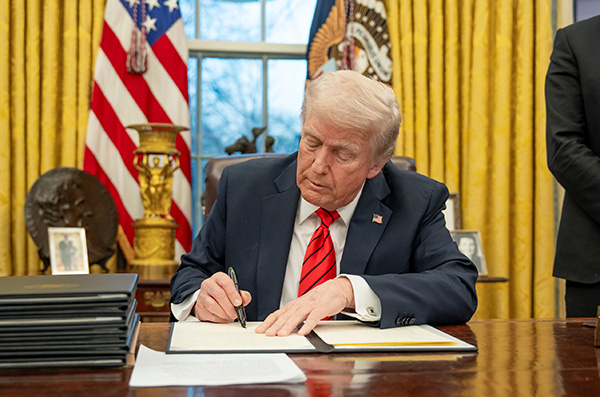
On March 13, 2026, President Trump signed Executive Order 14394, Removing Regulatory Barriers to Affordable Home Construction. The Secretary of Housing and Urban Development, in coordination with the Assistant to the President for Domestic Policy, developed a series of regulatory best practices for state and local governments to implement that will ease existing barriers to housing construction and affordability. These practices encourage community and neighborhood choice, which is why the recommendations generally do not address local density directives. The Best Practices are sorted into three categories:
- Cost: Practices that reduce the overall cost of home construction.
- Land: Practices that increase available space for housing development.
- Time: Practices that expedite the overall timeline to building a house.
A common thread among these three categories is a recommendation to utilize technology to ease barriers to housing construction and enhance affordability. From repealing wet signature requirements to modernizing outdated systems in a permitting office, state and local governments should perform a full review of their residential construction process and eliminate administrative and technological burdens to home construction.
These Best Practices outline a state and local regulatory environment for housing that is streamlined, is easy to understand, and reduces costs for consumers. Having a complex regulatory environment also excludes small homebuilding companies that would otherwise be able to add supply to the local market. Significant regulatory burden also results in increased costs for homebuyers. These Best Practices are tailored to recommend efficiencies in the market for home construction that will result in reduced costs for consumers.
The Trump Administration recognizes that jurisdictions need flexibility to implement reasonable requirements to build. However, the state and local regulatory environment in many areas of the country discourages housing development with arcane and inefficient policy. These Best Practices present a clear starting point for all state and local governments to begin, or continue, an active effort to remove unnecessary burdens to home construction in their jurisdiction.
- Rein in local and state-imposed mandates, costs and fees
- Cap permitting fees
- Eliminate impact fees unless they are directly quantifiable and proximately relatable to the specific development
- Curtail any other fees, mandates, taxes on new development or construction
- Prohibit requirements to build unrelated offsite projects or infrastructure
- Adopt fee transparency by publishing a list of all development fees
- Implement building codes that enable efficient, new home construction and renovation
- No retroactive application of new or changed building codes
- No local add-ons to state building, environmental, or labor codes, except as necessary for disaster recovery or resilience or if it reduces the cost of housing
- No state or local add-ons to ICC codes or federal requirements, except as necessary for disaster recovery or resilience or if it reduces the cost of construction
- Eliminate or sunset green-energy building requirements and non-evidence-based building codes
- Adopt innovative strategies that are open to a variety of construction means and methods
- Regulate manufactured and modular homes using objective standards for building and safety rather than the construction method and process
- Reexamine prohibitions and restrictions on manufactured or modular construction when comparable site-built housing is permitted
- Reexamine publicly mandated aesthetic requirements
- Relax restrictions that either explicitly or implicitly mandate traditional, on-site “stick-built” home construction in order to avoid inhibiting innovative options
- Repeal mandatory electrifications of appliances and heaters
- Expedite disposal of publicly owned land for use in housing development – for all income levels but especially for middle-income
- Remove arbitrary limitations on residential housing development beyond urban centers, including urban growth boundaries, growth moratoria and commuting penalties
- Prohibit tree protection ordinances that have minimum requirements and exorbitant removal fees for single family lots
- Allow by-right development for single-family homes
- Establish in-lieu fee funds for wetlands mitigation
- Adopt regulatory transparency by publishing a list of all required inspections, permits and approvals
- Streamline permitting processes for housing developments
- Establish a permit review “fast lane” for permits covering residential & new building permits
- End unnecessary, multiple reviews
- Cap permitting timelines
- Impose a cumulative building timeline, or “shot clock” or other binding timelines of ti 60 days for right to build and ti 30 days for construction permitting and inspections
- Adopt a unified development ordinance
- Re-examine local planning commission and zoning board review timelines, publication requirements and meeting appearance requirements
- Leverage technology, including artificial intelligence for expedited approval of permits
- Close implementation loopholes using shot-clocks and other timeline commitments
- Allow third-party inspections and appropriate builder choice by certified entities for inspections and studies
- State-certified inspectors for code inspections
- State certified engineers for environmental, site plan and plat reviews
- Ensure swift dispute resolution with government agencies and private parties regarding construction matters
- Adopt building contractor license reciprocity between and within states